Closer Together: How Marton Primary's Approach to Parent-Teacher Communication Raises Attainment for Every Child
There is a quiet but significant truth that underpins everything we do at Marton Primary School: a child's education does not pause at the school gate. It continues at the kitchen table, during the car journey home, and in the small moments of conversation that fill a family's evening. For that reason, the relationship between our staff and the families we serve is not a courtesy — it is a cornerstone of how we deliver on our promise to inspire young minds every day.
Research consistently demonstrates that children whose parents are actively engaged with their schooling achieve better outcomes across all subjects, demonstrate greater confidence in the classroom, and are more likely to develop a genuine love of learning. At Marton Primary, we have built our communication practices around this evidence, designing systems that are not only informative but genuinely collaborative.
Why Communication Is More Than Sending Letters Home
For many years, the predominant model of school-to-home communication was one-directional: newsletters arrived in schoolbags, reports were posted once a year, and parents were invited to an annual parents' evening. Whilst those elements still have their place, they are no longer sufficient on their own.
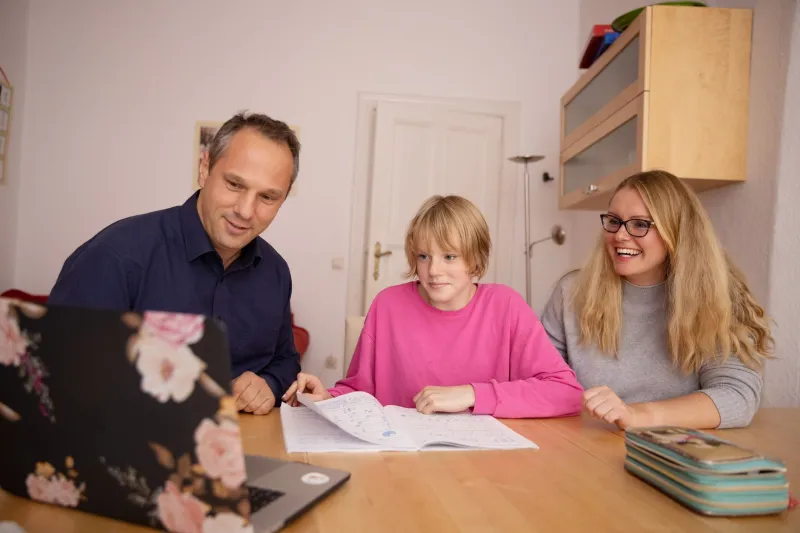
At Marton Primary, we understand that meaningful communication is a two-way exchange. It involves listening as much as informing. When a parent shares that their child has been anxious about reading aloud, or mentions a significant change at home, that information allows our teachers to respond with appropriate sensitivity and support. Equally, when our staff communicate early about a child who is finding a particular concept challenging, parents can offer reinforcement at home before a small difficulty becomes a larger one.
This philosophy shapes every interaction we have with families — from the informal chat at the classroom door to the structured termly review.
The Structures We Use at Marton Primary
Regular Written Updates Our class teachers provide termly curriculum overviews that outline precisely what children will be learning over the coming weeks. These are not vague summaries; they are specific enough for parents to understand the topics, vocabulary, and skills their child will encounter. This means that when a child mentions they are learning about the water cycle or working on column subtraction, parents are already familiar with the context and can engage meaningfully.
Parents' Evenings and Learning Reviews We hold formal parents' evenings twice yearly, but we do not treat these as the only opportunity for substantive conversation. Where a teacher identifies a particular strength to celebrate or a need to address, they will make contact proactively — because waiting until the next scheduled appointment is not always in the child's best interest.
Digital Communication Channels Marton Primary makes use of a secure digital platform through which parents can receive updates, access key documents, and correspond with staff in a timely manner. This has proved especially valuable for working families who may not always be present at the school gates. Accessibility matters, and we are committed to ensuring that our communication reaches every family, not only those who find it easiest to attend in person.
Open-Door Culture Perhaps the most important structure is the least formal: our staff are genuinely approachable. Teachers are available for brief conversations at the start and end of the school day, and our office team are always on hand to help families navigate any concerns or queries. We actively discourage the notion that parents should hesitate before making contact — early conversations prevent small worries from growing unnecessarily.
What Consistency Between Home and School Actually Looks Like
One of the most tangible benefits of strong communication is consistency. When teachers and parents are aligned in their approach — whether that relates to reading strategies, mathematical methods, or the language used to encourage a child — the child receives a coherent message. This coherence is particularly important in the early years of schooling, when children are forming foundational habits and attitudes towards learning.
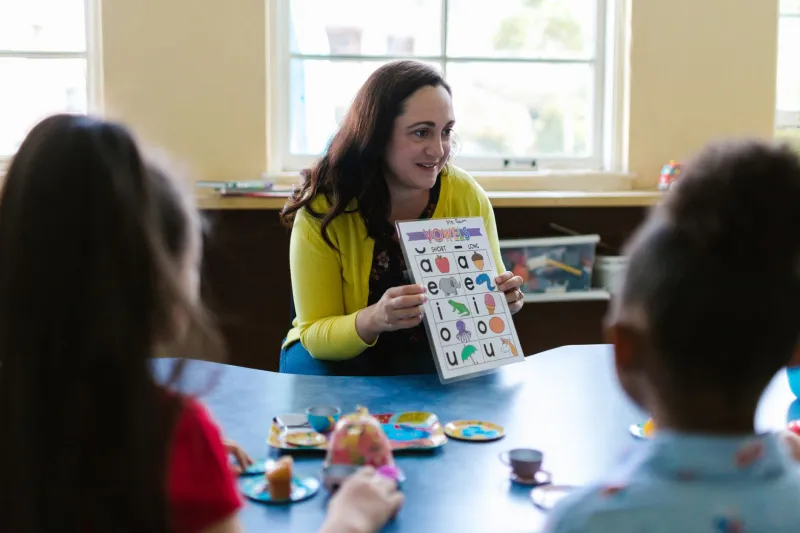
For example, Marton Primary uses a specific phonics programme in Key Stage 1. When parents understand the methods being used — rather than defaulting to approaches they remember from their own schooling — they can support their child's reading development far more effectively. The same principle applies to mathematics, where modern methods of calculation may differ from those parents encountered as children. We provide workshops and guidance precisely to bridge this gap, ensuring that home practice reinforces rather than confuses classroom learning.
Practical Steps Parents Can Take Right Now
Being an engaged parent does not require hours of free time or specialist knowledge. The following approaches, grounded in the partnerships we build at Marton Primary, can make a meaningful difference:
- Read the curriculum overview sent at the start of each term. Even a brief familiarity with the topics your child is studying opens the door to richer conversations at home.
- Ask specific questions rather than simply asking "How was school today?" Try "What did you find tricky today?" or "Can you teach me something you learned this week?" These questions invite reflection and often reveal more.
- Attend every parents' evening, and come prepared with your own observations. You know your child in ways that teachers cannot fully see within the school day.
- Make contact early if something feels wrong. Whether your child has expressed anxiety, lost confidence, or seems disengaged, raising it promptly allows the school to respond. Teachers are not alarmed by these conversations — they welcome them.
- Celebrate learning at home. When your child shares something they have discovered or achieved, your genuine enthusiasm reinforces the message that learning is worthwhile.
The Long View: What Partnership Builds Over Time
The relationship between a family and a school is not static. It evolves as a child moves through year groups, encounters new challenges, and develops their own sense of identity as a learner. At Marton Primary, we are committed to sustaining that relationship across a child's entire time with us — not simply at the moments of transition or difficulty, but throughout the ordinary rhythm of the school year.
Children who see their parents and teachers working in genuine partnership receive a powerful message: the adults in their life are united in caring about their growth. That sense of security is not a soft benefit — it is foundational to the confidence and resilience that enable children to take on new challenges and persist when things are difficult.
We are proud of the communication culture we have built at Marton Primary, and we remain committed to strengthening it further. If you have suggestions, questions, or simply wish to learn more about how you can deepen your involvement in your child's learning journey, we encourage you to speak with your child's class teacher or visit our school office. The conversation, as always, is open.