Brushes, Stages, and Melodies: How the Arts Quietly Power Academic Achievement at Marton Primary
There is a moment that many teachers at Marton Primary recognise instantly. A child who has struggled to articulate their thoughts in a written exercise stands up during a drama session, steps into a character, and delivers their lines with startling clarity. Something has shifted. The barrier that existed between thought and expression has, at least temporarily, dissolved.
This is not a coincidence, and it is not simply a matter of one child having a flair for performance. It is the result of deliberate, evidence-informed teaching practice — one that places creative subjects not at the margins of a busy timetable, but firmly at its core.
More Than a Creative Outlet
There remains, in some quarters of educational debate, a tendency to view the arts as supplementary — enjoyable enrichment that earns its place once the 'real' subjects have been attended to. At Marton Primary, we take a rather different view, and the evidence supports us.
Research published by the Arts Council England and echoed in studies from the University of Newcastle has consistently demonstrated that sustained engagement with creative disciplines correlates with measurable improvements in literacy, numeracy, and critical thinking. Children who participate regularly in structured arts education develop stronger working memory, greater ability to sustain attention, and markedly improved communication skills — all of which translate directly into academic performance across the curriculum.
For our staff, these findings are not abstract statistics. They are visible in classrooms every single week.
Music and the Architecture of Language
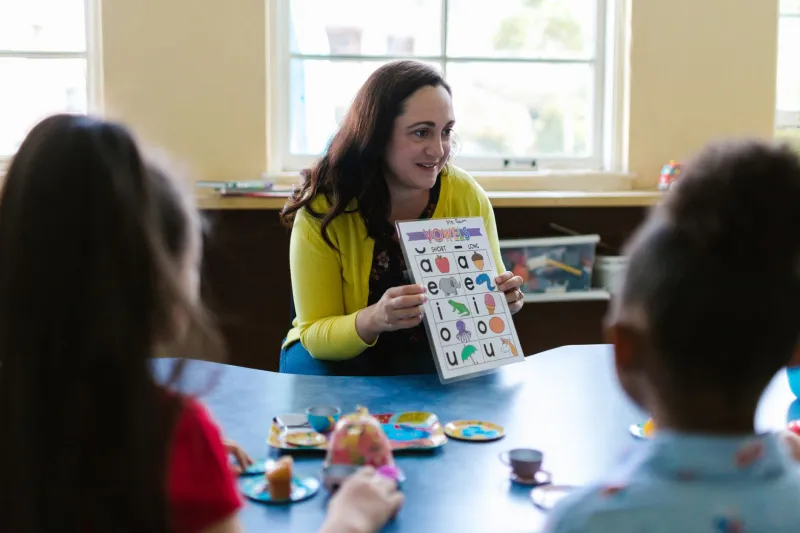
Our approach to music at Marton Primary is rooted in the understanding that rhythm, pattern, and pitch are not merely musical concepts — they are cognitive tools. When children learn to read notation, clap in time, or identify the structure of a piece of music, they are exercising the same neural pathways that underpin phonological awareness and reading fluency.
Our Key Stage 1 music lead has observed this connection directly: "When children begin to hear patterns in music — the way a phrase repeats, the way a melody rises and falls — they start to hear patterns in language too. It becomes easier for them to identify syllables, to notice rhyme, to break words apart. Music gives them a kind of internal rhythm for reading."
This is why singing, instrumental work, and structured listening are integrated throughout the school week, rather than confined to a single timetabled slot. From morning registration songs in Reception to glockenspiel lessons in Year 3 and choir rehearsals for older pupils, music at Marton Primary is a continuous thread, not a weekly event.
Drama as a Vehicle for Voice
If music builds the architecture of language, drama teaches children how to inhabit it. Role play, storytelling, and performance require pupils to think from perspectives other than their own — a skill that underpins empathy, persuasive writing, and comprehension alike.
In Year 4, a recent cross-curricular project saw pupils dramatise scenes from the Roman invasion of Britain, drawing on their history learning to write and perform short scripts. The results were striking. Pupils who had shown limited engagement during written history tasks became animated researchers, eager to ensure their dialogue was historically plausible. Their subsequent written work demonstrated a depth of understanding that had not previously been evident.
"Drama gives children a reason to care about accuracy," observed the class teacher involved in the project. "They want their character to be believable. That motivation drives them to read more carefully, think more critically, and write with greater precision."
This kind of integration — where drama serves the learning objectives of another subject whilst simultaneously developing communication skills — is a hallmark of how we approach the arts at Marton Primary.
Visual Arts and the Development of Problem-Solving
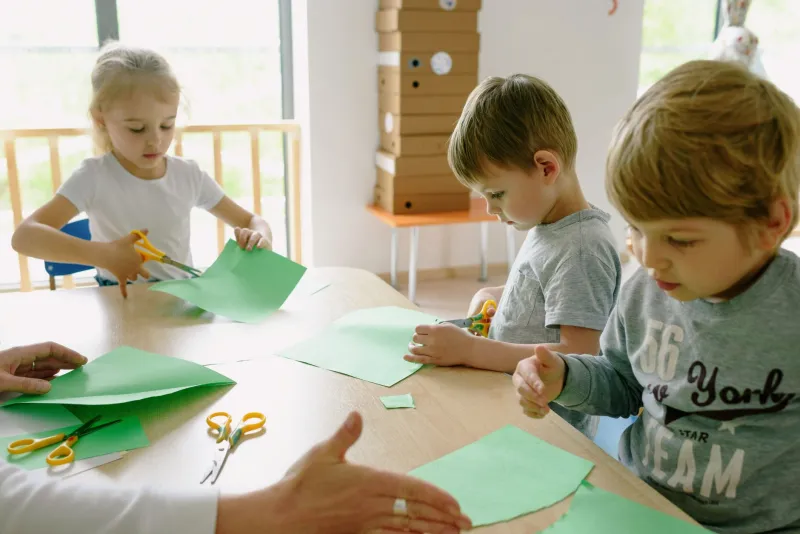
The visual arts, perhaps more than any other creative discipline, teach children to tolerate ambiguity and persist through difficulty. A drawing does not always turn out as intended. A colour mix may not produce the expected result. A composition may need to be rethought entirely. In navigating these challenges, children develop precisely the kind of flexible, iterative thinking that underpins scientific enquiry and mathematical reasoning.
Our art and design curriculum is structured to make this process explicit. Children are taught not only techniques but also the habit of reflection — to step back from a piece of work, consider what is and is not working, and make informed decisions about how to proceed. Sketchbooks are used across all year groups as a record of this thinking process, valuing the journey as much as the finished outcome.
One parent recently remarked that their child had begun applying this same approach to their maths homework — attempting a method, recognising it wasn't working, and trying an alternative approach rather than simply giving up. The connection to their art practice, the parent felt, was unmistakable.
Confidence as a Curriculum Outcome
Underpinning all of this is something that does not appear on any standardised assessment framework but which our staff regard as one of the most significant outcomes of arts education: confidence.
Children who regularly perform, exhibit, create, and share their work in a supportive environment develop a resilience and self-assurance that permeates everything else they do. The annual school production, art exhibitions shared with parents, and class performances at school assemblies are not simply pleasant occasions — they are carefully designed opportunities for children to experience the particular pride that comes from creating something, working hard at it, and sharing it with others.
This confidence is especially significant for children who may not yet shine in more traditional academic contexts. The arts offer a different kind of excellence — one that values imagination, emotional intelligence, and craftsmanship alongside factual recall and procedural accuracy.
A Whole-School Commitment
At Marton Primary, the arts are not the responsibility of a single specialist teacher or an enrichment coordinator working in isolation. They are a whole-school commitment, reflected in timetabling decisions, staff professional development, and the physical environment of the school itself — from the artwork displayed in corridors to the instruments available in classrooms.
We believe that every child who passes through our doors deserves an education that nurtures the full range of their capabilities. An education that asks them not only to recall and calculate, but to imagine, interpret, and express.
The evidence is clear. The experience of our teachers confirms it. And the children themselves, given the opportunity to create, perform, and reflect, demonstrate it every day.
The arts are not a luxury. At Marton Primary, they are a cornerstone.