Why Play Is Serious Business: The Science and Practice Behind Marton Primary's Approach to Resilient, Confident Learners
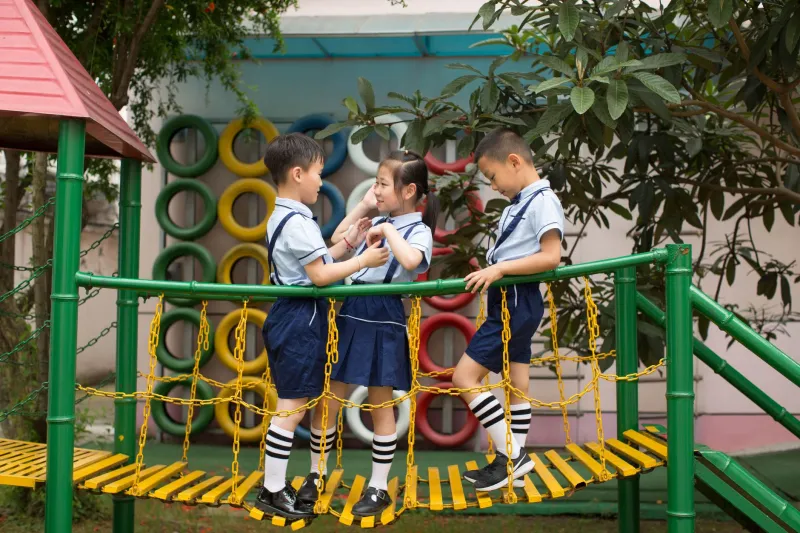
There is a common misconception that the moment a child steps off the playground and into the classroom, the real learning begins. At Marton Primary School, we respectfully challenge that view. The laughter echoing across the school grounds, the negotiation happening beside the climbing frame, and the imaginative worlds being constructed in the sandpit — these are not pauses in education. They are education.
Our commitment to play-based learning is not a passing trend, nor is it a concession to childhood whimsy. It is a considered, evidence-informed approach that places the development of the whole child at the heart of everything we do.
What the Research Tells Us
The academic case for play in early childhood and primary education has been building steadily for several decades. Research from institutions including the University of Cambridge and the LEGO Foundation has consistently demonstrated that children who engage in rich, purposeful play develop stronger executive functioning — the set of mental skills that includes working memory, flexible thinking, and self-control.
Perhaps more significantly, play creates low-stakes environments in which children are free to fail, adapt, and try again. This cycle — attempt, setback, perseverance — is precisely the mechanism through which emotional resilience is cultivated. A child who has learned to rebuild a collapsed tower of blocks with equanimity is developing the same inner resource they will later draw upon when facing a difficult maths problem or a social disagreement with a peer.
Dr Stuart Brown, a leading researcher in play science, has described play as "the gateway to vitality." In the context of primary education, we would add that it is also the gateway to confidence.
How Marton Primary Integrates Play Into the School Day
At Marton Primary, we make a careful distinction between unstructured play and structured play — and we value both equally, for different reasons.
Unstructured play, particularly during morning and lunch breaks, gives children the freedom to direct their own activity. This autonomy is crucial. When a child decides what game to play, who to invite, what rules to follow, and how to resolve disagreements, they are exercising a remarkable range of cognitive and social skills entirely of their own volition. Our staff are trained not to over-intervene during these periods, instead observing, supporting where genuinely necessary, and allowing children the dignity of working through challenges themselves.
Structured play, embedded within lessons across the curriculum, allows teachers to pursue specific learning objectives through playful methods. In our Reception and Key Stage 1 classes, you will regularly find children engaged in role-play scenarios that develop language and empathy, construction activities that introduce early mathematical concepts, and collaborative storytelling that builds both literacy and listening skills. As children progress into Key Stage 2, these approaches evolve — but the principle that learning should be engaging, active, and often joyful remains constant.
Our outdoor environment has also been thoughtfully designed to support these goals. Loose parts, natural materials, and open-ended resources encourage children to invent, problem-solve, and collaborate in ways that fixed equipment simply cannot replicate.
Building Social Skills, One Interaction at a Time
One of the most valuable — and least visible — outcomes of play-based learning is the development of social competence. Learning to share, to compromise, to read the emotions of others, and to advocate for oneself are skills that cannot be taught through instruction alone. They must be practised, repeatedly, in real situations with real stakes.
The playground and the play-based classroom provide exactly these opportunities. When two children disagree over the rules of a game, they are navigating a genuinely complex social moment. When a group must collaborate to complete a construction challenge, they are learning to listen, to delegate, and to value contributions different from their own.
At Marton Primary, our staff play an important role in this process — not by resolving every conflict for children, but by equipping them with the language and strategies to resolve conflicts themselves. Phrases like "I feel frustrated when..." and "Can we find a solution that works for both of us?" are introduced early and reinforced consistently, both in structured PSHE sessions and in the natural flow of the school day.
The Role of Managed Risk
A genuinely resilient child is one who has encountered manageable challenges and come through them. This is why, at Marton Primary, we are committed to what educationalists sometimes call "risky play" — activities that involve a degree of physical or emotional challenge appropriate to the child's age and development.
This does not mean placing children in harm's way. It means resisting the impulse to eliminate every possible source of difficulty or discomfort. Climbing a little higher than feels entirely comfortable, navigating a disagreement without adult mediation, or attempting a creative task with no guaranteed outcome — these experiences, when supported by a caring school environment, build the kind of inner confidence that no worksheet can provide.
Parents sometimes express concern that their child is struggling on the playground or finding group activities difficult. We welcome these conversations, and we would gently encourage families to see moments of difficulty not as failures, but as the very experiences through which growth occurs.
Extending Play-Based Learning at Home
The principles that underpin our approach at school can be meaningfully extended into family life. Here are some practical suggestions for parents and carers:
-
Protect unstructured time. In an age of scheduled activities and screen-based entertainment, simply allowing children free time to play — indoors or outdoors, with minimal direction — is genuinely valuable. Resist the urge to fill every moment.
-
Embrace open-ended materials. Cardboard boxes, fabric scraps, clay, and building blocks offer far more creative potential than most purpose-built toys. The absence of a predetermined outcome encourages imagination and problem-solving.
-
Let them struggle a little. When your child encounters a difficulty during play, pause before stepping in. Ask questions rather than providing solutions: "What have you tried so far?" or "What do you think might happen if...?"
-
Play alongside them. Children benefit enormously from seeing adults engage playfully and openly. A parent who can lose gracefully at a board game, or who approaches a creative activity with curiosity rather than a fixed goal, models precisely the attitudes we seek to nurture.
-
Talk about play. Asking your child about what they played at school, who they played with, and what happened when things went wrong opens rich conversations about social dynamics, feelings, and problem-solving.
A Whole-School Commitment
At Marton Primary School, our belief in the power of play is not confined to the Early Years Foundation Stage. It informs our teaching philosophy across every year group, every subject, and every corner of our school community. We are proud to be a place where children are encouraged to take intellectual risks, to collaborate generously, and to approach challenge with curiosity rather than anxiety.
Because ultimately, the children who leave Marton Primary ready to face secondary school and beyond are not those who have simply accumulated knowledge. They are those who have learned, through years of purposeful play, that they are capable, resilient, and wonderfully equipped to navigate whatever comes next.