Growing Readers: How to Nurture Your Child's Literacy From Their First Day to Year 6
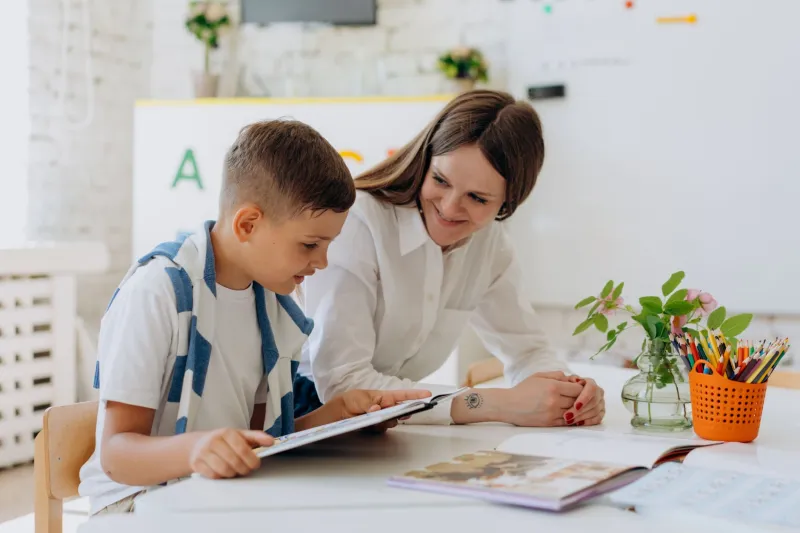
Learning to read is one of the most significant achievements of a child's early life. It opens doors to imagination, knowledge, and independence in ways that few other skills can match. At Marton Primary School, we believe that the partnership between home and school is absolutely central to helping every pupil flourish as a reader. Whether your child has just begun Reception or is preparing to leave us at the end of Year 6, there are always purposeful, enjoyable ways to support their literacy journey at home.
This guide is designed to demystify the stages of reading development, explain the methods we use in school, and offer practical suggestions that fit naturally into busy family life.
The Building Blocks: Phonics in Reception and Year 1
For most children, the reading journey begins with phonics — the systematic relationship between letters and the sounds they represent. In Reception, pupils are introduced to Phase 2 phonics, learning the most common letter sounds (known as graphemes) and beginning to blend them together to read simple words such as 'cat', 'pin', and 'hop'. By the end of Year 1, children are expected to have progressed through Phases 3 to 5, gaining familiarity with digraphs (such as 'ch', 'sh', and 'th'), vowel sounds, and more complex spelling patterns.
At home, you can reinforce this learning in small, consistent ways. Spending just ten minutes a day reading aloud together — pointing to words as you go — helps children connect spoken sounds with written text. Simple word games, such as asking your child to spot words beginning with a particular sound on a walk to school or during a supermarket trip, keep phonics learning feeling playful rather than pressured.
Year 1 pupils also sit the Phonics Screening Check in June, a short, informal assessment that helps teachers identify any children who may need additional support. We will always keep you informed about how your child is progressing and what you can do to help.
Recommended reads for Reception and Year 1: Zog by Julia Donaldson, The Tiger Who Came to Tea by Judith Kerr, and the Biff, Chip and Kipper Oxford Reading Tree series, which many families will recognise from their own school days.
Building Fluency: Years 2 and 3
Once the foundations of phonics are secure, the focus shifts towards reading fluency — the ability to read accurately, at a reasonable pace, and with appropriate expression. Children in Year 2 are working towards the Key Stage 1 reading standard, which means reading a wider range of texts with growing independence and beginning to discuss what they have read in some depth.
By Year 3, most pupils are transitioning from 'learning to read' to 'reading to learn'. This is an exciting shift, but it can also be a point where some children's enthusiasm dips if they find longer texts daunting. Choosing books that genuinely interest your child — whether that is stories about animals, football, magic, or history — is far more valuable than selecting books purely on the basis of reading level.
Reading together remains important at this stage, even if your child is capable of reading independently. Sharing a book as a family, taking turns to read paragraphs aloud, or listening to an audiobook on a car journey all count as meaningful literacy experiences. Talking about books — asking open questions such as 'Why do you think the character did that?' or 'What do you think might happen next?' — builds comprehension skills that are just as important as decoding words accurately.
Recommended reads for Years 2 and 3: The Worst Witch by Jill Murphy, Mr Gum by Andy Stanton, Flat Stanley by Jeff Brown, and The Owl Who Was Afraid of the Dark by Jill Tomlinson.
Expanding Horizons: Years 4 and 5
Pupils in Years 4 and 5 are expected to read a broad range of fiction, non-fiction, and poetry with confidence and stamina. At this stage, teachers place greater emphasis on inference — the ability to read between the lines and draw conclusions that are not explicitly stated in the text. Children are also introduced to more sophisticated vocabulary and encouraged to consider how authors make deliberate choices about language, structure, and perspective.
At home, one of the most effective things you can do is model your own reading habits. When children see the adults around them reading for pleasure — whether novels, newspapers, magazines, or recipes — they begin to understand that reading is a lifelong activity with genuine value, not merely a school task.
Visiting your local library together is another wonderful habit to cultivate. Many libraries across the UK run reading challenges during the summer holidays, and the simple act of choosing your own books can spark real enthusiasm in reluctant readers. If your child enjoys screens, e-readers and reading apps such as MyOn or Sora can also provide engaging alternatives to printed books.
Recommended reads for Years 4 and 5: Holes by Louis Sachar, Kensuke's Kingdom by Michael Morpurgo, Matilda by Roald Dahl, Varjak Paw by SF Said, and The Selfish Giant by Oscar Wilde for an introduction to classic literature.
The Final Stretch: Year 6 and Preparing for Secondary School
By Year 6, pupils are working towards the Key Stage 2 reading standard assessed through their SATs in May. The reading paper requires children to engage with a variety of texts and answer questions that test retrieval, inference, vocabulary knowledge, and the ability to comment on authorial intent. Whilst it is natural to feel some anxiety around assessments, the best preparation remains what it has always been: regular, enjoyable reading.
Encourage your Year 6 child to read widely — including non-fiction, newspaper articles, and poetry — as exposure to different text types builds the versatility that the KS2 assessment rewards. Discussing current events at the dinner table, or reading a short news article together from a child-friendly source such as First News, can also strengthen comprehension in an organic, low-pressure way.
Perhaps most importantly, try to keep the conversation around reading positive. Children who associate books with pressure or failure are far less likely to read for pleasure as they grow older. Celebrating progress, however small, and allowing your child to choose what they read whenever possible, goes a long way towards nurturing a lifelong love of literacy.
Recommended reads for Year 6: Goodnight Mister Tom by Michelle Magorian, Skellig by David Almond, The Boy in the Striped Pyjamas by John Boyne, and Northern Lights by Philip Pullman for more ambitious readers.
A Final Word From Marton Primary School
Here at Marton Primary School, we are enormously proud of the reading culture we work to build each and every day. Our staff are always happy to discuss your child's reading progress, recommend books tailored to their interests, or suggest strategies for any particular challenges they may be facing. Please do not hesitate to speak with your child's class teacher or visit the school office if you would like further guidance.
Reading is not a race, and every child's journey is uniquely their own. With patience, encouragement, and the right books in their hands, every pupil at Marton has the potential to become a confident, curious, and enthusiastic reader.