When Books Lose Their Magic: Helping Children Rediscover the Joy of Reading
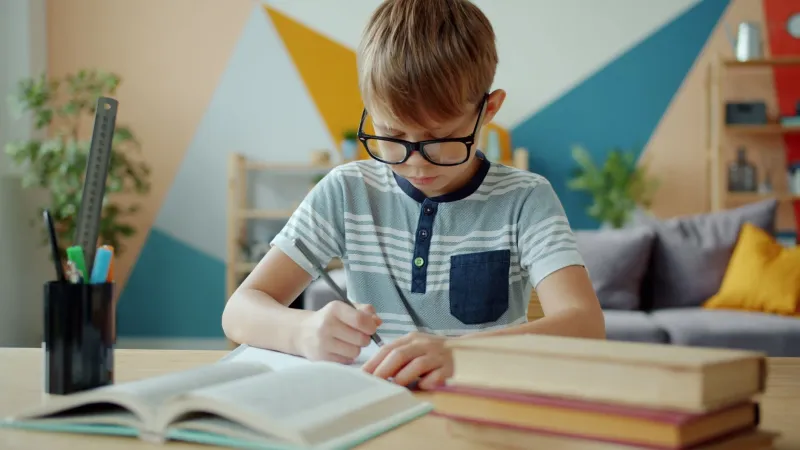
There is a moment many parents recognise. The child who once begged for just one more chapter at bedtime is now slumped at the kitchen table, staring at a book as though it were a maths problem they cannot solve. The enthusiasm has evaporated. The magic, it seems, has gone.
This shift is so common that educators have given it a name: the reading cliff. It tends to appear somewhere between Years 3 and 4, and it catches many families completely off guard. Understanding what lies behind it is the first step towards helping your child climb back up.
From Learning to Read, to Reading to Learn
In the early years of primary school, reading instruction is explicit and structured. Children are taught phonics, blending, and decoding — the mechanical tools of literacy. Success is frequent and visible. A child sounds out a word correctly and feels an immediate sense of achievement.
By Year 3, however, the curriculum assumes that the mechanics are largely in place. Children are now expected to use reading as a vehicle for learning across subjects — history, science, geography, and beyond. The texts become longer, the vocabulary more complex, and the purpose shifts from mastering a skill to acquiring knowledge. For many children, this transition is jarring. What was once a series of small, rewarding victories becomes something that feels effortful and, worse, exposing.
Children who found the early stages manageable may suddenly feel out of their depth. Those who were already less confident readers can begin to associate books with frustration rather than pleasure. The emotional response is entirely logical: we all tend to avoid things that make us feel inadequate.
Warning Signs Worth Noticing
The reading cliff does not always announce itself dramatically. More often, it creeps in quietly. Parents should look out for a cluster of subtle signals rather than waiting for an obvious refusal.
A child who once chose books freely but now gravitates exclusively towards very short texts, comic formats, or screens may be finding sustained reading cognitively taxing. Complaints of boredom with books — particularly from a child who previously enjoyed them — can sometimes mask anxiety rather than genuine disinterest. Slow, laboured reading aloud, even from a child who seemed fluent a year earlier, may indicate that comprehension is struggling to keep pace with decoding.
It is also worth noting that boys and girls can exhibit this disengagement differently. Boys, research suggests, are more likely to abandon reading visibly and vocally. Girls may continue to read but disengage emotionally, going through the motions without genuine investment in the text.
None of these signs indicate a serious problem in isolation. Together, however, they suggest that a child may need support to rekindle their relationship with books.
The Pressure Trap
The instinct of many caring parents is entirely understandable: if a child is not reading enough, the solution must be to ensure they read more. Reading logs, enforced reading sessions, and rewards tied to the number of books completed are all well-intentioned responses. Unfortunately, they can make matters considerably worse.
When reading becomes a transaction — something done to earn screen time or avoid parental disappointment — the intrinsic motivation that drives genuine literacy development is quietly undermined. Children are perceptive. They know when an activity is being managed rather than enjoyed, and that knowledge colours their experience of it.
The goal, therefore, is not to increase the quantity of reading through external pressure, but to restore the internal sense of pleasure and curiosity that makes reading self-sustaining.
Practical Approaches That Actually Help
The most effective strategies tend to share a common thread: they reduce the stakes and increase the pleasure.
Let children choose. This sounds obvious, but it is frequently overlooked. A child who has agency over what they read — even if the choice is a football annual, a joke book, or a graphic novel — is far more likely to engage than one who is presented with a text selected for its educational value. Variety and volume matter more than prestige at this stage.
Read together, without agenda. Returning to the shared reading habits of early childhood, even for children who are technically capable of reading independently, can be enormously restorative. Listening to a parent read aloud removes the cognitive effort of decoding and allows a child to access more complex, satisfying stories than they might manage alone. It also re-establishes reading as something associated with warmth and connection rather than assessment.
Visit the library as an experience, not an errand. Libraries remain one of the most powerful tools available to families supporting reluctant readers. Allowing a child to browse without a list, to discover something unexpected, and to leave with books they have genuinely chosen themselves can shift their relationship with reading in ways that a school book bag rarely achieves.
Talk about books without quizzing. When adults respond to a child's reading with comprehension questions, the conversation can feel like a test. Instead, share your own reactions to books. Ask what the child thinks will happen next, or which character they find most interesting. Treat their opinion as genuinely valuable, because it is.
Normalise reading as adult behaviour. Children model what they observe. If the adults in their lives are seen to read for pleasure — not just to check emails or scroll social media — the message that reading is a worthwhile, enjoyable activity is conveyed far more powerfully than any reward chart.
A Word About Time
It is worth acknowledging that the reading cliff coincides with a period of significant social and cognitive development. Children in Years 3 and 4 are navigating more complex friendships, greater academic demands, and an expanding awareness of the world around them. Their attention is genuinely stretched.
Patience, therefore, matters as much as strategy. Some children move through this phase relatively quickly, particularly when the adults around them respond with calm encouragement rather than anxiety. Others may take longer. The important thing is that the door remains open — that reading continues to be presented as a source of pleasure and possibility, not a performance to be judged.
At Marton Primary, we see this phase in children every year, and we are always happy to discuss individual concerns with parents. If you are worried about your child's engagement with reading, please do speak with their class teacher. Early, supportive conversations are almost always more effective than waiting to see whether the enthusiasm returns on its own.
The magic is rarely truly gone. More often, it simply needs the right conditions to return.