Bright Minds, Disruptive Classrooms: Understanding What Advanced Learners Are Really Telling Us

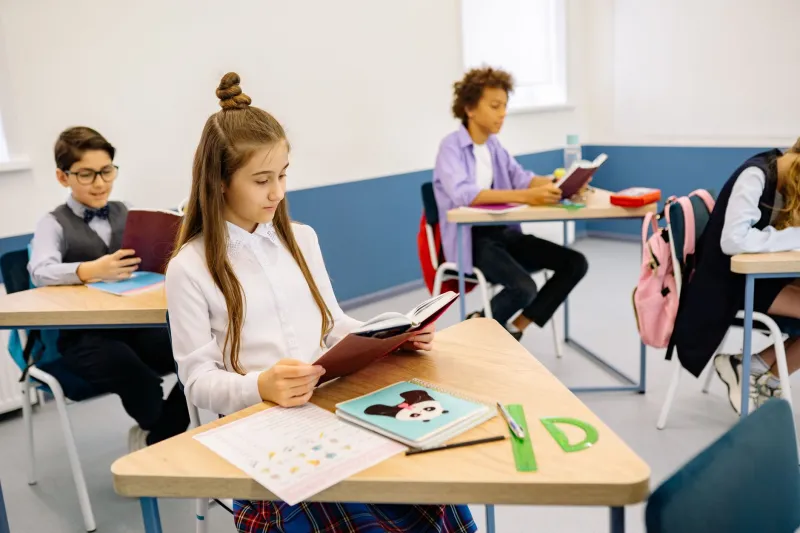
Let us begin with a child many teachers will recognise. She finishes her maths worksheet in four minutes. She asks if she can do something else. She is told to check her work. She checks it in thirty seconds — it is correct. She begins tapping her pencil. She whispers to the child next to her. She is asked to sit quietly. She draws in the margin of her book. By the end of the lesson, she has received two reminders about behaviour. Her teacher notes, not for the first time, that she can be disruptive. Her parents are told she struggles to focus.
What nobody has yet said, clearly and plainly, is this: she is bored. And boredom, for a cognitively advanced child, is not a trivial inconvenience — it is a genuine educational emergency that, if left unaddressed, can shape a child's relationship with learning for years.
This is not a marginal concern. Research consistently suggests that advanced learners — children whose cognitive abilities significantly exceed age-related expectations — are among the most underserved groups in mainstream UK primary education. Not because their schools lack commitment, but because their needs are frequently invisible, misread, or deprioritised in environments rightly focused on ensuring all children reach a baseline of attainment.
The Psychology of Boredom: More Than Just Waiting
Boredom is not simply the absence of stimulation. Psychologists define it as a state of aversive arousal — a condition in which a person is both under-engaged and unable to escape the situation causing that under-engagement. It is, in neurological terms, actively unpleasant rather than merely neutral.
For children, this matters because the brain's response to chronic under-stimulation is not passive acceptance. The brain seeks stimulation wherever it can find it. For advanced learners in classrooms that do not challenge them, this search tends to manifest in one of three ways: outward disruption (seeking stimulation through social interaction or rule-testing), inward withdrawal (daydreaming, emotional disengagement, or apparent passivity), or anxiety (a more complex response in which the mismatch between a child's intellectual capacity and their environment generates genuine distress).
All three presentations are routinely misidentified. The disruptive child is labelled as having behavioural difficulties. The withdrawn child is described as shy or unmotivated. The anxious child is referred for pastoral support that addresses the symptom but not the cause. In each case, the intervention misses the point — and the child learns, gradually, that school is a place where their intellectual energy is not welcomed.
What Parents Often Notice First
Parents of advanced learners frequently describe a pattern that begins at home before it becomes visible at school. Their child is voraciously curious about particular topics — often far beyond what is covered in the curriculum. They ask questions that feel oddly sophisticated for their age. They may have a highly developed vocabulary, an unusual capacity for abstract reasoning, or an intense interest in fairness and moral complexity.
At home, these qualities are experienced as remarkable. At school, they can create friction. A child who already understands the concept being introduced may visibly disengage during the explanation phase of a lesson. A child who has read widely on a topic may correct a teacher or offer information that disrupts the planned flow of a session. Neither behaviour is malicious, but both can generate negative responses that, over time, teach the child to conceal their abilities rather than express them.
This phenomenon — sometimes called "ability masking" — is particularly prevalent among girls, who research suggests are more likely to modulate their behaviour to fit social expectations. A girl who masks her ability may appear perfectly average in school whilst experiencing profound intellectual frustration. This is one reason why advanced learners in primary schools are often identified later than their abilities warrant, if they are identified at all.
What Schools Can Do: The Case for Genuine Differentiation
Differentiation — the practice of tailoring learning tasks to the needs of individual learners — is a well-established principle in UK primary education. In practice, however, it is often applied primarily at the lower end of the attainment spectrum, where the consequences of insufficient challenge are more immediately visible. Extending provision for advanced learners tends to receive less systematic attention.
At Marton Primary, we take the position that differentiation for high-attaining pupils is not an optional enhancement but a core component of our inclusive practice. Every child deserves to be working within their zone of proximal development — the range of tasks that are challenging enough to promote growth but not so difficult as to cause unproductive frustration. A child who is consistently working well below that zone is not learning; they are waiting.
In practical terms, this means moving beyond simply providing "more" of the same work and instead offering tasks that are qualitatively different — problems that require genuine reasoning, open-ended enquiries without predetermined answers, opportunities to make connections across subjects, and challenges that reward depth of thinking over speed of completion.
Curriculum compacting — a technique in which children who have already mastered the content of a unit are assessed early and given alternative, more demanding tasks — is one approach that research has shown to be particularly effective. It requires careful planning and clear communication between teachers and parents, but the benefits for both the individual child and the wider classroom are significant.
The Role of Language and Identification
One of the most powerful things a school can do for an advanced learner is to name what they see — clearly, positively, and without making the child feel that their abilities are a problem to be managed. Telling a child "I can see this isn't challenging enough for you — let's find something that really stretches your thinking" reframes the situation entirely. It positions intellectual hunger as something to be fed, not suppressed.
Identification matters too. Schools that have clear processes for recognising advanced learners — through teacher observation, standardised assessment, and parental input — are better placed to provide appropriate provision than those that rely on children to self-identify or on informal impressions. At Marton Primary, we use a range of information sources to build a picture of each child's learning needs, and we review that picture regularly as children develop.
A Responsibility to Every Learner
It is sometimes suggested, in debates about educational provision, that gifted children will be fine regardless — that their abilities will carry them through. This is a comfortable assumption, but it is not well supported by evidence. Advanced learners who are persistently under-challenged are at meaningful risk of disengagement, underachievement, and the development of negative learning identities that can persist long after the immediate cause has passed.
Every child who walks through the doors of Marton Primary deserves to be genuinely stretched — to experience the particular satisfaction that comes from working hard at something genuinely difficult and succeeding. That experience is not the exclusive preserve of children who find learning more demanding. It belongs to every child, at every point on the attainment spectrum. Ensuring that it reaches those at the top of that spectrum is not a luxury. It is simply good teaching.